
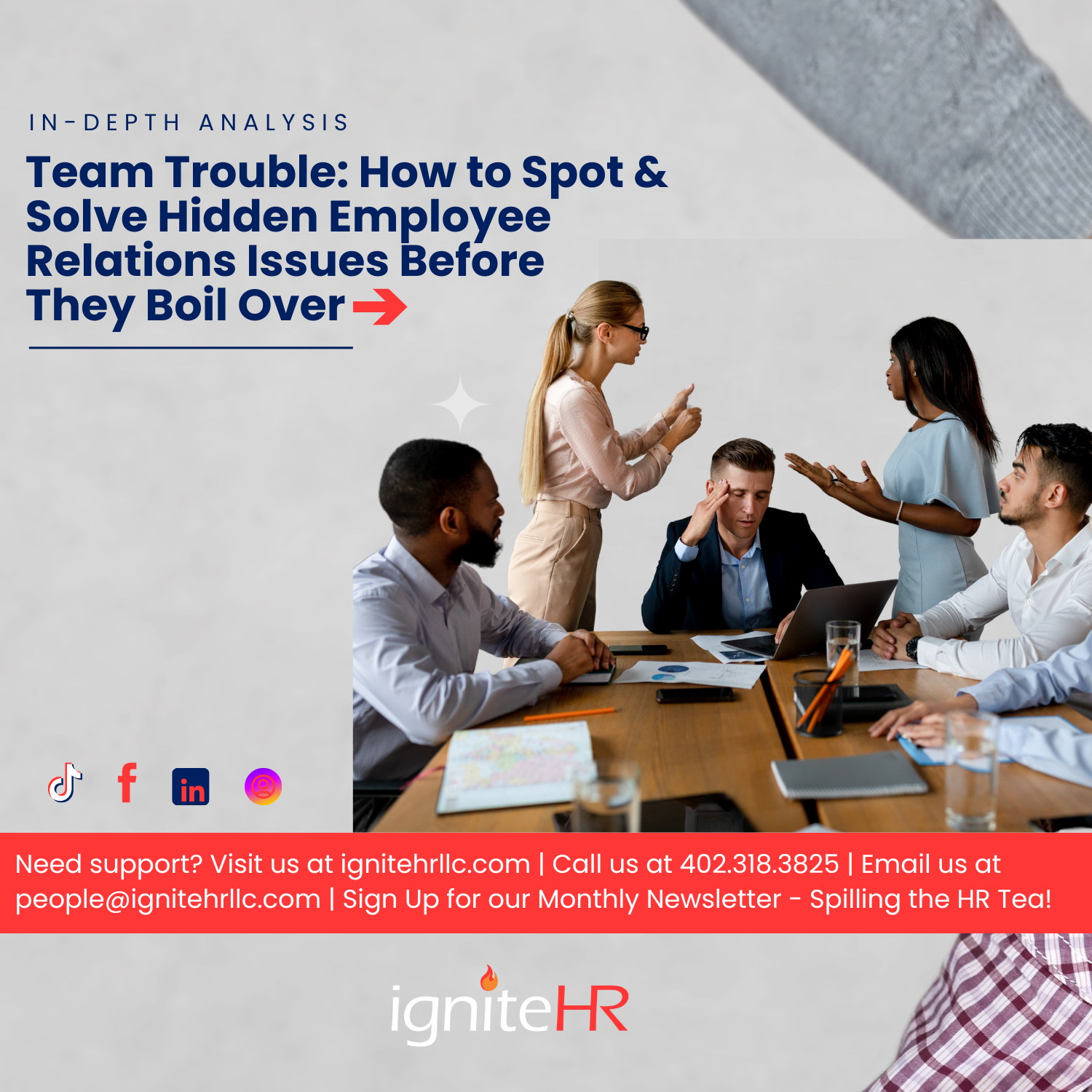
Because no one likes surprise HR fires.
TL;DR
Employee relations issues don’t usually explode overnight. They simmer—quietly eroding trust, tanking morale, and draining productivity. This blog uncovers the subtle warning signs SMBs often miss and how to fix them before they become full-blown culture crises.
The Real Cost of “Small” People Problems
Employee relations issues—interpersonal conflict, microaggressions, inconsistent accountability, manager favoritism—don’t always show up on a report. But they show up everywhere else. In missed deadlines. In passive-aggressive Teams chats. In whisper networks that thrive during lunch breaks. In the meeting after the meeting.
According to a report by CPP Inc. (publisher of the Myers-Briggs Type Indicator®), U.S. employees spend 2.8 hours per week dealing with conflict, costing businesses $359 billion annually in lost productivity.
And for SMBs? Those “minor” issues could be the reason you’re burning out managers, losing high performers, or struggling with quiet quitting.
Hidden Symptoms of Employee Relations Trouble
Not every issue comes with a formal complaint. More often, here’s how trouble bubbles up:
- Sudden changes in collaboration (teams stop brainstorming or pulling together)
- Increased sick days or last-minute PTO in specific departments
- Manager avoidance—you notice people stop engaging in 1:1s or huddle meetings
- Anonymous survey red flags (“lack of trust,” “favorites,” “poor communication”)
- High-performing employees disengaging without explanation
These signs are leading indicators, not background noise. And if you’re not paying attention, they become exit interviews.
Why SMBs Miss the Early Warnings
Let’s be honest: most SMBs aren’t ignoring these problems out of negligence. You’re lean. You’re focused on growth. And when a manager says, “It’s just a personality clash,” it’s easy to move on to the next fire.
But here’s the trap:
SMBs lack formal ER (Employee Relations) protocols—so the escalation path is murky. That leaves managers to wing it, employees to internalize it, and issues to fester.
Case in Point (No Client Claims—Just the Facts)
A regional tech firm (300 employees) saw a 40% spike in attrition over 12 months. Leadership chalked it up to market trends. But exit interviews—and eventually, Glassdoor—revealed a deeper issue: toxic middle management.
The company hadn’t trained managers on consistent discipline, communication, or emotional intelligence. Employees cited retaliation, “playing favorites,” and ignored concerns.
Once they finally brought in a third-party ER audit and rolled out leadership accountability measures, turnover slowed and team NPS began to climb.
The lesson? Culture problems often look like people problems until you trace the root.
So How Do You Solve It?
Here’s our HR playbook to spot and solve employee relations issues before they snowball:
1. Use an Anonymous Listening Tool
Don’t rely solely on open-door policies. Use pulse surveys or virtual suggestion boxes. Ask:
- “Do you feel safe raising concerns?”
- “Do you trust your manager to handle conflict fairly?”
2. Train Managers—Hard Stop
Your middle managers are the employee experience. Equip them with conflict resolution training, emotional intelligence development, and coaching skills. If you don’t, they default to avoidance or bias.
3. Create Clear Escalation Paths
Employees need to know who to go to when something isn’t right—and trust that it won’t backfire. That means having more than one pathway (especially in smaller teams).
4. Document, Document, Document
Even in a small shop, document verbal warnings, patterns, and resolution efforts. It protects your company—and gives you the data to spot trends across teams.
5. Bring in a Neutral Third Party
Whether it’s a fractional HR consultant or workplace investigator, sometimes internal politics prevent true resolution. A neutral pro can assess and mediate before things go legal or viral.
You don’t need a full-blown HR department to prevent employee relations disasters. But you do need a process. Because when team tension isn’t addressed, it doesn’t go away—it grows roots.
And in today’s labor market, poor culture is a luxury you literally can’t afford.
igniteHR is a full-service HR consulting firm headquartered in Omaha, NE, specializing in practical, people-first HR solutions for small and mid-sized businesses. We make HR simple and impactful so you can focus on what matters—growing your business and your people.
For more tips and insights signup for our newsletter: Join The HR Tea Party! –
Enjoy this article? Check out our other blog posts: HR Unfiltered